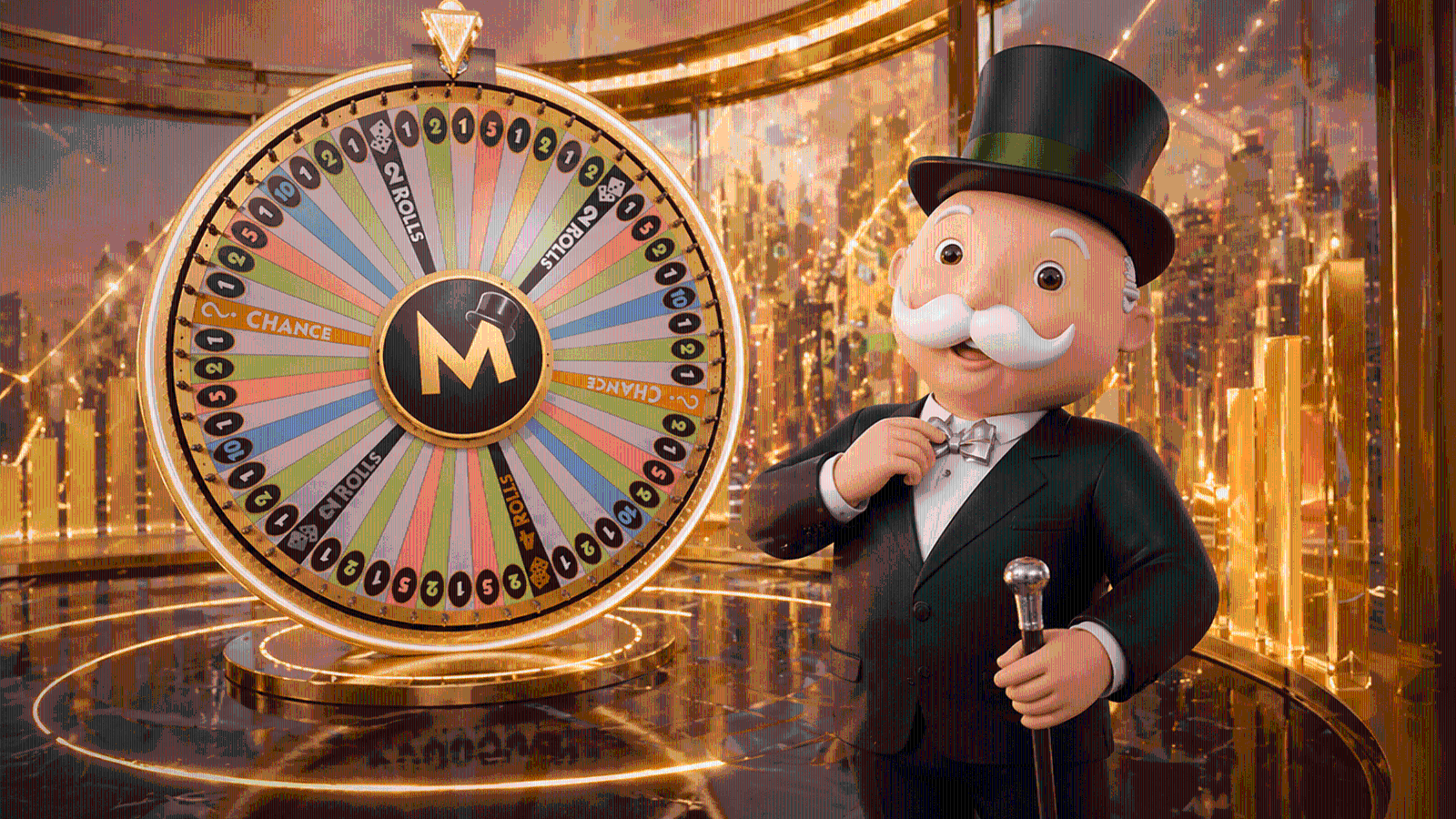

4 ROLLS Monopoly Live: How the Bonus Round Works and What to Expect
Monopoly Live features a signature bonus round that can transform a single spin into something far more exciting. If you have ever watched the wheel slow down near the 4 Rolls segment, you already know the anticipation it creates. This guide covers how the 4 Rolls bonus activates, what unfolds during the round, which multipliers are possible, and whether placing your bet on this segment makes strategic sense.
What Is 4 Rolls in Monopoly Live?
Monopoly Live includes two distinct bonus games tied to dedicated segments on the wheel: 2 Rolls and 4 Rolls. When the wheel stops on either of these segments, the corresponding bonus game launches with that specific number of dice rolls. The 4 Rolls segment, as the name suggests, grants four rolls of the dice once triggered.
During the bonus game, Mr. Monopoly walks along the iconic board and collects multipliers from the spaces he lands on. At the conclusion of the feature, the total accumulated multiplier applies to the activating bet, determining the final payout for every player who qualified.
How to Trigger the 4 ROLLS Bonus
Some players deliberately cover the bonus game segments with their wagers, including 4 Rolls, because they do not want to miss the chance to qualify when the round fires. The logic is straightforward: if you have no bet on the segment, you sit out regardless of how large the resulting multiplier turns out to be.
To participate, simply place a wager of any size on the 4 Rolls space before the betting timer expires. Whenever the wheel lands on that segment, you will enter the bonus round automatically.
Inside the 4 Rolls Bonus Round – Step by Step
The bonus round follows a clear sequence from the moment the wheel stops on 4 Rolls. Below is a breakdown of how a typical round unfolds from start to finish.
Here is a practical example of how a round might play out:
- Imagine the four dice totals are 7, 4, 10, and 6.
- Mr. Monopoly first moves 7 spaces from Go.
- Then he advances another 4 spaces along the board.
- Then 10 more spaces, and finally 6 more.
- The final result depends on which space he occupies after the fourth roll.
- You may receive a cash multiplier applied directly to your bet.
- You may trigger one of the CHANCE style bonus effects that alter the round.
- You may collect rewards from special properties. When Mr. Monopoly lands on spaces with houses or hotels, the prizes for those properties increase. Passing Go doubles all prizes on the board. Landing on Income Tax or Supertax reduces your accumulated winnings, and landing on Go To Jail requires you to roll a double before you can continue.
- You may also reach another outcome defined by the layout of the bonus board at that moment.
Tile Types on the Monopoly Live Board
Understanding the different tile types is important because each one affects the round in a unique way. The space Mr. Monopoly lands on determines whether multipliers grow, shrink, or trigger special events. Here is a full list of tile types present on the board.
- Properties. Standard color group spaces that hold a base multiplier value. Houses and hotels on these tiles increase the multiplier awarded when Mr. Monopoly lands on them.
- Go. Passing this space doubles all current prize values on the board, creating a significant uplift to every subsequent landing on a property tile.
- Income Tax. Landing here reduces the total accumulated winnings by a fixed percentage, cutting into the multiplier you have built up to that point.
- Super Tax. Functions similarly to Income Tax but applies a larger reduction to your current winnings, making it one of the least desirable outcomes.
- Chance. Triggers a random card draw that can award instant multipliers, add houses or hotels to properties, or produce other unpredictable effects on the board.
- Community Chest. Works like Chance but draws from a separate pool of cards, each carrying its own reward or penalty that modifies the round.
- Go To Jail. Sends Mr. Monopoly directly to the Jail space. He must roll a double on subsequent turns to escape, which consumes valuable rolls.
- Free Parking. A neutral space with no direct effect on multipliers. Mr. Monopoly simply pauses here before the next roll without any reward or penalty.
- Railroads. Special property tiles that carry their own fixed multiplier values, adding to the total payout independently of the color group properties on the board.
- Utilities. Similar to railroads, these tiles hold separate multiplier values and contribute to the final result when Mr. Monopoly lands on them during his walk.
Doubles – The Key to Big Multipliers
The dice in Monopoly Live are rolled live in the studio, and whenever both dice show the same number, a double is registered. Participating players then receive an additional free turn, extending the round beyond the standard allocation.
Doubles are considered the gateway to large multipliers because each extra roll gives Mr. Monopoly more opportunities to land on high value properties, pass Go (doubling all prizes), and accumulate a larger total. In a 4 Rolls game, a streak of doubles can push the round well past four turns, compounding the result dramatically.
How the Final Multiplier Is Calculated
Each time Mr. Monopoly lands on a property tile, the multiplier associated with that space is added to a running total. Houses and hotels increase the value of individual tiles, so landing on a built up property contributes a larger amount to the sum.
Passing Go applies a multiplication effect rather than a simple addition: it doubles every prize on the board from that point onward. This means any subsequent landings on properties yield twice what they would have before Go was passed. The interplay of additive tile values and the multiplicative Go doubling is what allows the final multiplier to reach extreme levels during a favorable run.
4 Rolls vs 2 Rolls – Which Bonus Is Better?
Both bonus segments offer access to the Monopoly board, but they differ in frequency, potential, and risk. The table below compares the two options side by side.
| Parameter | 2 Rolls | 4 Rolls |
|---|---|---|
| Probability | Approximately 3.2% | Approximately 1.1% |
| Average Frequency | Roughly every 31 spins | Roughly every 91 spins |
| Starting Rolls | 2 | 4 |
| Doubles Potential | Moderate | High |
| Highest Recorded Multiplier | Around 500x | Over 10,000x |
| Average Bonus Multiplier | Approximately 25x | Approximately 100x |
| Max Bet | Varies by casino | Varies by casino |
Key takeaways from the comparison:
- Frequency advantage. 2 Rolls appears roughly twice as often as 4 Rolls, making it a more regular occurrence during any session.
- Exponential potential. 4 Rolls provides twice as many initial dice throws, and this creates exponentially higher potential because each additional roll can trigger further doubles.
- Bankroll consideration. With a limited bankroll, 2 Rolls may be the more practical option since it hits more frequently and preserves funds over longer sessions.
- Chasing records. For players pursuing a large multiplier, 4 Rolls remains the only realistic route to record level results thanks to its compounding mechanics.
Best Strategies for Betting on 4 ROLLS
There is no single correct way to approach the 4 Rolls segment, but several common strategies exist depending on your risk tolerance and session goals. Below are three popular approaches players use.
Bonus Only Strategy (High Risk)
This approach involves placing a 50/50 split wager on 2 Rolls and 4 Rolls on every single spin. It is often used by players with a substantial bankroll who are primarily focused on chasing large multipliers from the bonus rounds.
The trade off is clear: the majority of spins will produce no return, since the wheel lands on number segments far more frequently than on bonus segments.
| Pros | Cons | Best Suited For |
|---|---|---|
| Maximum exposure to both bonus rounds on every spin | Long losing streaks are common due to low bonus frequency | Players with a large bankroll and patience for extended dry spells between bonus activations |
| Highest possible multiplier potential when a bonus triggers | Rapid bankroll depletion without occasional number segment wins | |
| Simple execution with no complex bet distribution required |
Hedging Strategy (Medium Risk)
This method involves placing the main wager on number segments such as 1, 2, and 5, while keeping a smaller side bet on 4 Rolls. Players use this structure when they want some exposure to the bonus round without relying on it entirely.
Number segment wins may occasionally sustain the bankroll between bonus triggers, softening the impact of waiting for 4 Rolls to appear.
| Pros | Cons | Best Suited For |
|---|---|---|
| Regular small returns from number segments keep the session alive | Lower overall bet on 4 Rolls reduces the multiplier payout when the bonus does trigger | Players seeking a mix of consistent returns and occasional bonus round excitement |
| Maintained access to 4 Rolls bonuses when they appear | Requires careful bankroll management across multiple segments | |
| Balanced risk profile suitable for extended play sessions |
Tracker Based Approach
This strategy involves monitoring the game tracker to observe how many spins have passed since the last 4 Rolls result. Some players increase their 4 Rolls bet after a long gap, but it is important to understand that this does not increase the probability of 4 Rolls appearing. Every spin is entirely independent of previous outcomes.
| Pros | Cons | Best Suited For | Important Note |
|---|---|---|---|
| Provides a structured framework for bet sizing decisions during a session | Based on a misconception about probability; past results do not influence future spins | Players who prefer a systematic approach to their sessions, as long as they understand its limitations | No strategy changes the house edge |
| Encourages observation and engagement with the game flow | May lead to escalating bets during extended gaps without any statistical justification | ||
| Can feel psychologically satisfying when a long gap does end with a bonus |
Conclusion
The 4 Rolls bonus in Monopoly Live is the game's flagship feature, offering four dice rolls that can extend through doubles into a prolonged and rewarding board walk. Understanding how activation works, what each tile type does, and how multipliers compound through Go passes gives you a clear picture of what to expect. While no betting strategy alters the underlying odds, choosing an approach that matches your bankroll and risk appetite helps you enjoy the game on your own terms.